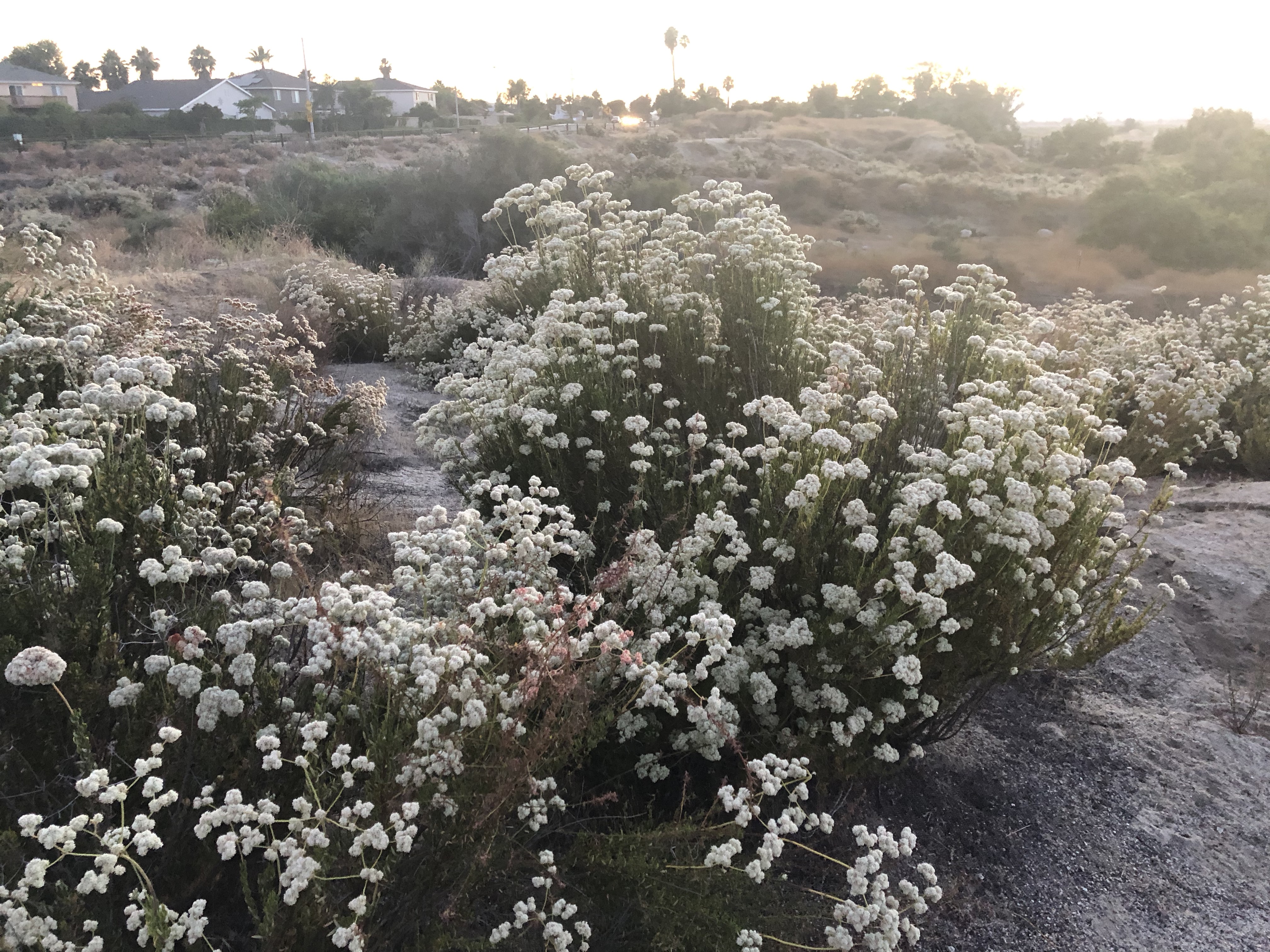
Plant: California Buckwheat
The California buckwheat’s habitat is the desert scrub. Like most plants, the California buckwheat uses resources such as water, soil, carbon dioxide, and sunlight.
Like all organisms, the plants have niche roles. Some of these niches are to provides shelter and/or shade for small animals, such as lizards and rabbits; absorbs water and nutrients from the soil; their flowers bloom from May all the way through October; provide pollen and nectar for bees in the area; their leaves are egg-shaped, and are about 1.5 to 3.8 inches long. The leaves are smooth or fuzzy on the top and fuzzy on the bottom.
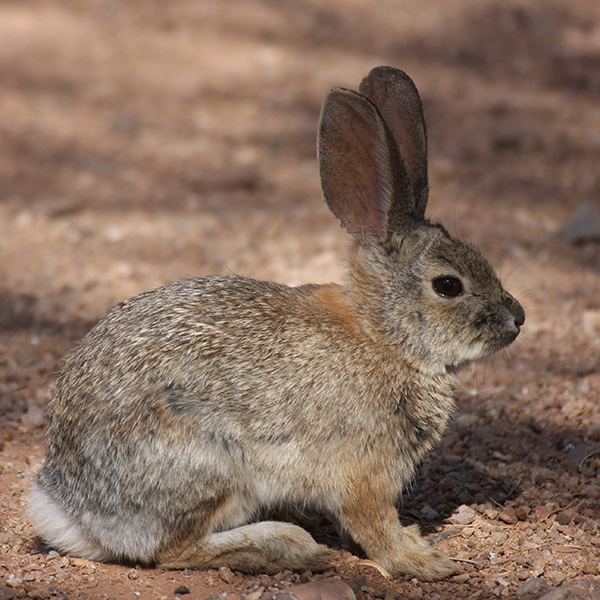
Animal: Desert Cottontail Rabbit
The desert cottontail rabbit’s habitat is the desert scrub. The rabbits uses very few resources to survive, they really only need water, space, and vegetation to feed on.
The rabbits also have niche roles. Some of these niches are feeding on almost any vegetation in the area, such as grasses; they receive most of the water they need from the plants they eat; cottontails are coprophagic, which means they eat their own pellets; they are a food source to larger predators such as hawks, snakes, coyotes, etc; avoid overheating by being more active at night. Their light-colored fur minimizes absorption of solar heat, and their large ears that have blood vessels just below the skin level, can radiate body heat to the air.
Interactions Between Species: The California buckwheat and desert cottontail rabbit can have two different relationships, a commensalistic relationship or a parasitism relationship. They form a commensalistic relationship when the rabbits hide in the California buckwheat for shade or shelter. Their parasitic relationship is formed when the rabbits feed off the plants’ leaves.
Resource Partitioning: The desert cottontail rabbits and snakes in the area compete for shelter as both live underground. This is ironic as one hunts the other for food, creating even a larger challenge for rabbits looking for a home. To co-exist and avoid being eaten, most rabbits tend to dig up their own home and line it with fur and dried grass to hide themselves and their babies.
Keystone Species: The keystone species of this ecosystem are the California buckwheat, the false goldenaster, etc. Any sort of vegetation is a keystone species as it is the producer of this ecosystems food chain. Without the vegetation the primary consumers would decline in population size, therefore the overall population of the ecosystem would fall.
Invasive Species: Humans are the invasive species of this ecosystem. They easily create the most destruction to the area by building on the land, littering, or off-roading. Building new housing would be removing plants and animals from their homes, and the vegetation would most likely not be replaced. Littering would pollute the air, and animals may ingest the trash as food. Just like construction, off-roading destroys animals’ homes and kills plants.
Coevolution: While doing my field study, I did not see any evidence of coevolution. However, an example of coevolution would be rabbits and hawks. Since the rabbits fur allows it to blend in with the dirt and vegetation, over time the hawk’s eyesight would need to improve.
Cryptic Coloration: Cryptic Coloration is seen in both the desert cottontail rabbit and the banded rock lizard. Both have evolved to a point where their exterior color allows them to better blend in with their environment. The rabbits light brown allows it to blend in with rocks and soil. The lizards scaly texture and dark brown shades allow it to blend in on top and under rocks. Both use this to their advantage when being hunted by predators.
Mimicry: Mimicry can be seen by the banded rock lizard. The lizard uses concealing mimicry when it sits on top of rocks. The lizards colors and patterns are similar to that of a rock.
 Desert Scrub